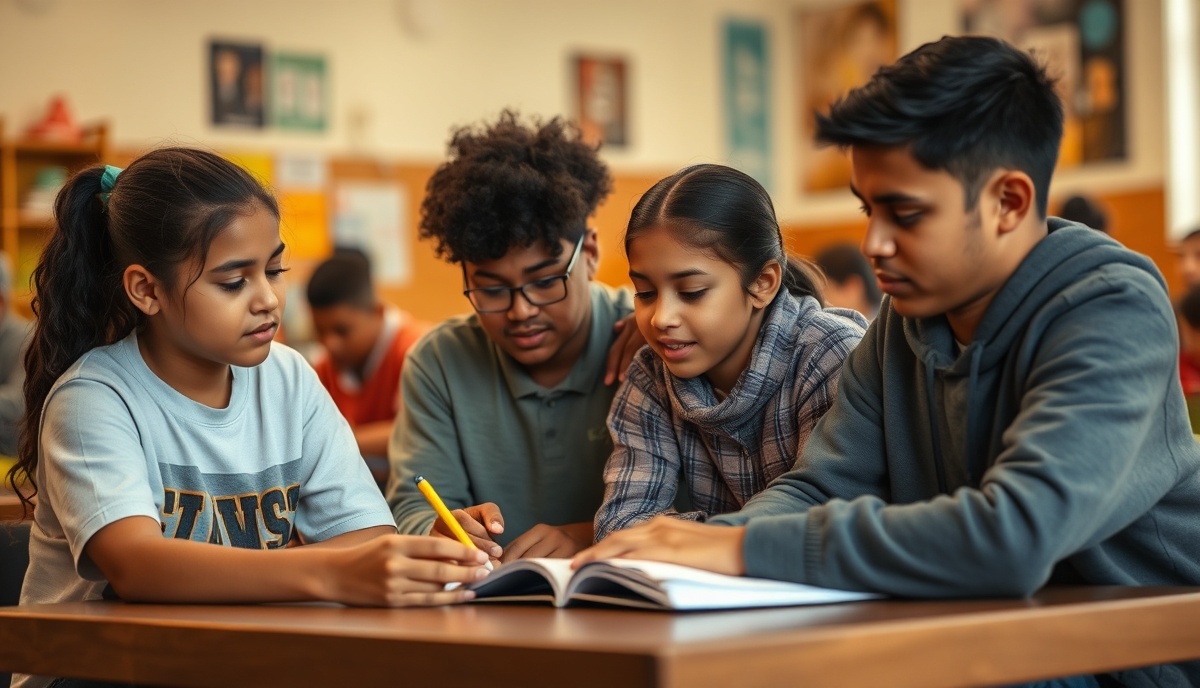
Education is often called the “great equalizer,” but beyond the rhetoric, what does the data actually show about education’s power to reduce poverty?
Recent research from the World Bank, UNESCO, and the UN Development Programme reveals concrete evidence: education isn’t just an individual benefit—it’s the most effective public investment for breaking cycles of poverty.
The Evidence: Education and Poverty Reduction
World Bank Data shows that completing secondary education increases lifetime earnings by approximately 37% for men and 25% for women in developing countries. But the poverty reduction goes deeper:
- Each additional year of schooling increases a person’s annual earnings by 10% on average (World Bank, 2019)
- In Latin America specifically, children whose parents completed secondary education are 50% more likely to complete secondary education themselves (UNESCO Institute for Statistics, 2021)
- Educational access reduces the intergenerational poverty transmission rate by up to 40% (United Nations Development Programme, 2022)
Beyond Individual Income: Community Multiplier Effects
The impact of education extends far beyond individual earnings:
Health Outcomes: UNESCO research indicates that mothers with secondary education are 37% more likely to seek prenatal care and 25% more likely to have births assisted by trained professionals, directly reducing child mortality rates by 15%.
Civic Engagement: OECD data shows that adults with secondary education are 3 times more likely to participate in democratic processes and community leadership, strengthening entire communities.
Economic Growth: World Bank analysis demonstrates that every 1% increase in secondary school enrollment leads to 0.37% economic growth, creating broader poverty reduction across communities.
The Latin American Context
In Latin America and the Caribbean, the statistics are particularly compelling:
- 62% of young people from low-income families do not complete secondary education (CEPAL/UNESCO, 2023)
- Youth without secondary education earn 43% less than their peers with secondary completion (ILO, 2023)
- Educational inequality is the primary driver of income inequality in the region (World Bank Latin America analysis, 2022)
Yet the opportunity is clear: regions that have invested in educational access have seen measurable poverty reduction. Costa Rica’s investment in universal secondary education resulted in a poverty reduction from 23% to 16% over two decades.
The Technology Factor
Access to digital education multiplies these benefits:
- Students with access to online learning tools perform 25-40% better in assessment tests (UNESCO digital learning study, 2022)
- In rural areas without traditional schools, digital access reduces educational gaps by 35% (World Bank connectivity study, 2023)
- English proficiency among workers increases lifetime earnings by 35% (international labor market data, 2022)
What This Means for Communities
These aren’t abstract statistics. Each percentage point of increased educational attainment represents thousands of families with better nutrition, access to healthcare, and stable employment. It represents children who see education as achievable, not aspirational.
The evidence is unequivocal: education is the single most effective investment in poverty reduction. When communities have access to quality education—particularly including digital literacy and language skills—they unlock genuine economic mobility.
The Investment Case
UNESCO calculates that every $1 invested in education returns $10-15 in economic growth and human development gains. This isn’t charity. This is economic reality.
Reflection from the Author
As founder of Reset Humano Foundation, I see this data manifested daily in our communities. The evidence doesn’t exaggerate education’s power—if anything, it understates the human transformation that happens when someone gains access to genuine learning opportunities.
I believe firmly that education remains the most powerful tool for breaking cycles of poverty and creating real opportunities. The World Bank data confirms what we see: when people—especially young people from vulnerable communities—access quality education, technology, and support for human development, transformation becomes possible. This is exactly why our mission focuses on bringing these tools to those who need them most.
The challenge isn’t whether education works. The data is conclusive. The challenge is ensuring that every person, regardless of economic background, has access to it.
Sources & References
- World Bank (2023). “Education and Economic Growth: Impact Analysis.” World Bank Development Research Group.
- UNESCO Institute for Statistics (2021). “Global Education Monitoring Report: Non-state actors in education.” UNESCO.
- United Nations Development Programme (2022). “Human Development Report: Inequality and Opportunity.” UNDP.
- CEPAL & UNESCO (2023). “Education and Employment in Latin America.” Regional Analysis.
- International Labour Organization (2023). “World Employment and Social Outlook.” ILO.
- OECD (2022). “Education at a Glance: OECD Indicators.” OECD Publishing.
- World Bank (2023). “Digital Development: Connectivity and Access in Developing Regions.”